
Vocalist: Learn to Sing
Lamarde LimitedMusic & Audio
4.426.00 Reviews
- Version
- 2.2.17
- Installs
- 10.00K
- Age Rating
- Everyone
Screenshots
Our Review of Vocalist: Learn to Sing
 Analysis by Appyee
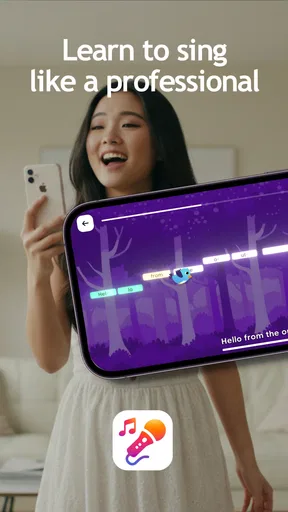
I spent time with Vocalist: Learn to Sing as a music and audio app, and my first impression is that it is aimed at people who want a more focused way to practise singing rather than simply play songs in the background. Its store summary, “Karaoke Nights 2 Vocal Heights,” points toward a performance-minded experience, while the short description, “Vocalist,” keeps the idea deliberately simple. In practice, I approached it as a small singing companion: something to open when I wanted to warm up, test my voice, or make a casual karaoke session feel more intentional.
That distinction matters. This is not the kind of app I would choose if I wanted a huge music library, social sharing, or a full recording studio. I see its value in the space between singing alone and taking formal lessons. It can give a beginner a reason to practise and give a casual singer a more structured routine. At the same time, anyone expecting a complete vocal course should keep expectations measured. The experience feels more useful when treated as a practice tool than as a replacement for a teacher.
How Vocalist feels in everyday use
The current version is 2.2.17, and the app is developed by Lamarde Limited. It is available free of charge, with in-app purchases priced at $6.99 per item. That makes the initial decision fairly easy: I can try the core experience without paying first, then decide whether the additional purchase fits the way I sing. The age rating is Everyone, which also makes the app approachable for families and younger beginners who want a low-pressure introduction to vocal practice.
I found the strongest use case to be a short, repeatable session. Rather than waiting for a free evening, I would open the app before singing and use the moment to pay attention to pitch and vocal control. That is a better habit than treating every attempt as a performance. A useful singing app should make practice feel accessible enough to repeat, and Vocalist works best when I use it in small bursts instead of demanding a dramatic transformation after one session.
A realistic example would be preparing for a relaxed karaoke night. I would practise a difficult part at home, notice where my voice starts to feel uncertain, and return to that passage before meeting friends. The benefit is not that the app magically fixes the song. The benefit is that it encourages me to listen more carefully to what I am doing. That change in attention can be more valuable than simply singing the same track repeatedly at full volume.
For a complete beginner, the attraction is the reduced pressure. There is no need to understand vocal terminology before starting, and the karaoke angle makes practice feel less formal than a traditional lesson. I can approach it with curiosity rather than worrying about whether I already have a “good” voice. That makes it suitable for someone who sings in the car, at home, or with friends but has never built a consistent routine.
More experienced singers may get something different from it. I would not use this as my only training method, but I could use it as a quick check before rehearsing. It can help create a regular moment for singing, especially on days when a full technical session feels unrealistic. The trade-off is that experienced users may quickly want more detailed control, deeper explanations, or a broader set of exercises than a lightweight mobile app is designed to provide.
What the current release suggests
The release information places the app on Android devices running version 8.0 or later. That is useful for people using older phones, because the minimum requirement is not restricted to recent hardware. Still, compatibility alone does not tell me how comfortable the experience will be on every screen or with every microphone. Singing apps depend heavily on listening conditions, so I would use headphones carefully and avoid judging the app in a noisy room.
The current release also gives existing users a clear point of reference. If the app has already become part of a practice routine, version 2.2.17 is the version to look for when checking the installation. I prefer this kind of stable, identifiable version information because it makes it easier to know whether I am reviewing the same experience as another user. It also helps long-term users distinguish a genuine change in behaviour from a problem caused by their phone, microphone, or surroundings.
I would be careful about interpreting the release date as proof of a particular feature history. The app was released on March 11, 2026, but that date by itself does not explain every change between earlier builds and the current one. What I can say with confidence is that the present version should be judged as a developing product rather than as a mature replacement for established singing education. That makes the app interesting for newcomers, while experienced users may want to watch how the product continues to evolve.
Its audience size gives a little context without changing my judgement. Vocalist has passed 10K installs, with a 4.4 average from 297 ratings and 26 written reviews. I take that as a sign that the app has found an interested audience, but not as a guarantee that it will suit every singer. Ratings are especially personal in this category: a beginner looking for encouragement may value the same simplicity that a trained vocalist considers too limited.
How to get more from a short practice session
My first practical tip is to separate warm-up from performance. It is tempting to jump straight into the most exciting song or the highest note, especially when the app has a karaoke-oriented identity. I would begin more gently, then use the more demanding material as a test rather than as the entire session. This makes it easier to notice whether a problem comes from pitch, breath, fatigue, or simply trying to sing too loudly.
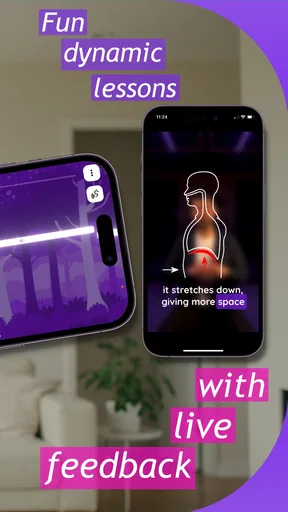
My second tip is to repeat a small section with one goal at a time. On one pass, I might concentrate on staying near the intended pitch. On the next, I might focus on keeping the sound relaxed. Trying to correct everything at once can make practice frustrating. Vocalist is more useful when I turn it into a feedback loop: attempt, listen, identify one issue, and try again. That workflow is simple, but it is more effective than endlessly restarting without knowing what I am trying to improve.
A third insight is that the app should be used at a comfortable volume. A phone speaker can encourage me to sing louder than necessary, which may hide pitch problems and make my throat feel tired. I would choose a quiet room, keep the backing sound at a level where I can still hear myself, and take breaks when the voice feels strained. This is not a flashy feature, but it changes the quality of the session more than adding another random attempt at a difficult note.
I would also keep a small mental record of recurring trouble spots. Even without turning the app into a formal training diary, I can remember whether I struggle more with low notes, high notes, entrances, or sustaining a phrase. That turns casual use into a personal practice plan. The app becomes less about chasing a perfect result and more about identifying patterns in my singing.
Where it fits beside other music apps
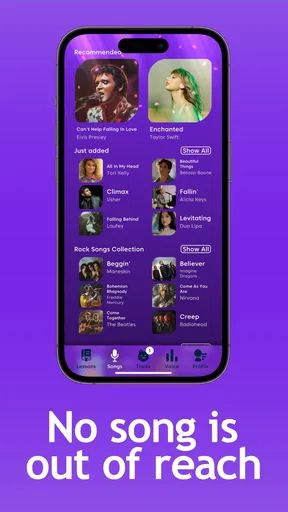
Compared with a general karaoke service, Vocalist: Learn to Sing feels more focused on the singer than on the size of the song catalogue. A conventional karaoke app is usually the better choice when I want to browse familiar tracks, sing socially, and enjoy a broad entertainment library. Vocalist is the better fit when my main question is, “How can I use this song or exercise to practise?” That difference is small on the surface but important in daily use.
Compared with a professional vocal lesson, the app is obviously more convenient and less expensive to begin with, but it cannot offer the personal correction of a teacher. A teacher can hear tension, posture problems, breath habits, and stylistic choices that a mobile experience may not explain in the same way. I would use Vocalist to build confidence between lessons, not to assume that an app can diagnose every technical problem.
It also differs from a recording studio app. Recording tools are useful when I want to edit, layer, mix, or share a finished performance. That is not the role I would assign here. Vocalist makes more sense before recording, when I am still working out how to approach a song. If my priority is producing polished audio, I would choose a dedicated recorder or music workstation instead.
The free entry point is another practical advantage over committing immediately to a paid course. I can test whether the routine suits me before spending money. However, the $6.99 per-item purchases mean I should think about what I actually need rather than buying impulsively. Someone who only wants occasional karaoke may be happier staying with the free experience, while a regular singer may find a paid addition worthwhile if it directly supports a repeated practice habit.
What existing users may notice
For someone who installed an earlier version, the most important question is not simply whether the number has changed, but whether the app still supports the same routine. A version update can affect familiarity, pacing, or the way a user moves through practice. I would give myself a few sessions with the current build before deciding whether it has improved my workflow. Singing is repetitive by nature, so even a small change can feel significant when it appears in every session.
New users should resist comparing their first attempt with someone else’s polished performance. The app is more encouraging when I treat early sessions as calibration. I need time to learn how loudly to sing, where to place the phone, and how the room affects what I hear. If the first session feels inconsistent, that does not automatically mean the app is failing. It may mean the setup needs to become more controlled.
That said, setup friction is a real limitation for this type of product. A phone microphone is not the same as a studio microphone, and background music, room echo, or another person nearby can affect the experience. I would not use a crowded room to make a serious judgement about my pitch. This is one reason I see Vocalist as a personal practice aid rather than an objective vocal laboratory.
The app is also not the right choice for someone who wants a highly social experience. If my motivation comes from public leaderboards, live collaboration, or sharing every performance with friends, I would look toward a karaoke community app instead. Vocalist appeals more to private improvement and casual confidence-building. That quieter approach is a strength for shy beginners, but it may feel too solitary for users who need social energy to keep practising.
Remaining gaps and sensible expectations
The biggest gap is depth. A person who wants a carefully staged curriculum, detailed vocal anatomy, or personalised correction may outgrow the app. I would especially recommend additional guidance for singers dealing with persistent discomfort, uncertainty about technique, or ambitions that require serious performance preparation. The app can encourage practice, but encouragement is not the same as expert assessment.
Another limitation is motivation over time. A simple singing tool can be enjoyable at first, yet routines often fade when there is no clear personal goal. I would connect each session to something concrete: learning one chorus, preparing for a family gathering, becoming more comfortable with a range, or simply singing for a few minutes on selected days. Without that goal, it is easy to open the app, try something briefly, and stop before any useful repetition happens.
The purchase model also deserves a calm decision rather than an automatic upgrade. Free access lowers the barrier, but a paid item should earn its place in my routine. I would use the free portion long enough to understand whether I return voluntarily. If I do not practise consistently without extra content, paying for more is unlikely to solve the real problem. If I already use the app several times a week, an additional purchase may make more sense because it supports a habit that is already present.
There is also a difference between learning to sing and learning one particular song. Vocalist can be part of the process, but singing skill transfers unevenly. A phrase that feels comfortable in one key may expose a weakness in another, and a successful karaoke attempt does not necessarily mean that breath control or pitch accuracy has improved everywhere. I would judge progress across several songs and sessions, not from one satisfying performance.
What I would watch as the app develops
Because the app is still associated with a relatively recent release, I would watch for improvements that make practice more measurable without making it intimidating. Clearer guidance, better ways to revisit difficult passages, and useful progress feedback would all strengthen the experience. The best future changes would help me understand what to practise next, not merely give me more material to open.
I would also pay attention to how well the app balances karaoke enjoyment with vocal discipline. The entertainment side is important because it keeps beginners interested, but the learning side needs enough structure to prevent random repetition. If future versions preserve the friendly feel while adding more purposeful routines, Vocalist could become more valuable for users who start casually and later want a consistent training habit.
For now, I recommend it to beginners, casual singers, and anyone who wants a low-pressure way to make karaoke practice more deliberate. I would skip it if I needed professional recording, a comprehensive course, or direct feedback from a vocal coach. My honest view is that Vocalist: Learn to Sing works best as a practical first step: free to try, easy to approach, and most rewarding when I use it with a specific goal instead of expecting instant mastery.
Lamarde Limited has created something that can occupy a useful middle ground between entertainment and practice. The app is not a substitute for patient training, but it can make that first step feel less intimidating. With a quiet room, sensible volume, short repeatable sessions, and realistic expectations, I can see it becoming a helpful part of a singer’s routine. The strongest reason to try it is simple: it gives me an accessible excuse to sing more intentionally, and regular intentional practice is where the real value begins.
Verdict
Strengths of Vocalist: Learn to Sing
- Short daily exercises make practice easy to fit into a busy routine.
- Useful vocal warm-ups can help prepare your voice before singing.
- Clear guidance makes the app approachable for beginners.
- Progress tracking can encourage consistent practice over time.
- Suitable for private practice without needing a teacher or studio.
Limitations of Vocalist: Learn to Sing
- Some lessons may feel repetitive after extended use.
- Advanced singers may find the training content too basic.
- Results depend heavily on regular practice and proper technique.
- Voice feedback may not replace guidance from a qualified vocal coach.
- Some features or lessons may require a subscription or in-app purchase.
Similar Picks in This Category
View All
YouTube Music
Google LLC4.4

Samsung Music
Samsung Electronics Co., Ltd.3.8

Spotify: Music and Podcasts
Spotify AB4.3

JioSaavn - Music & Podcasts
Saavn Media Limited4.3

Lark Player:Music Player & MP3
Lark Player Studio - Music, MP3 & Video Player4.6

StarMaker: Sing Karaoke Songs
SKYWORK AI PTE. LTD.4.3
Frequently Asked Questions
What is Vocalist: Learn to Sing, and who is it designed for?
Vocalist: Learn to Sing is a mobile singing-training app designed to help users practice pitch, vocal control, timing, and general singing technique. It can be useful for complete beginners who want structured guidance, as well as more experienced singers looking for convenient daily exercises. The app is best viewed as a practice companion rather than a replacement for personal lessons with a qualified vocal coach.
Can Vocalist: Learn to Sing actually improve my singing voice?
The app can support improvement by encouraging regular practice and helping you become more aware of pitch, accuracy, breathing, and vocal consistency. However, results depend heavily on how often and correctly you train. It cannot instantly change your voice or guarantee professional-level singing. Users should practice gently, follow the exercises carefully, and stop if they experience pain, strain, dizziness, or persistent vocal discomfort.
Do I need any special equipment to use Vocalist: Learn to Sing?
Most users should be able to begin with a compatible Android or iOS device and its built-in microphone. For more reliable pitch detection, it is helpful to practice in a quiet room and keep the phone at a reasonable distance from your mouth. Headphones may improve your listening experience, although microphone permissions and device audio quality can affect how accurately the app evaluates your singing.
Is Vocalist: Learn to Sing free to download and use?
The app may be available to download without an upfront charge, but some lessons, training programs, features, or content can require in-app purchases or a subscription, depending on the current version and platform. Before starting a trial, carefully check the payment terms, renewal conditions, and cancellation instructions shown in the store listing or inside the app so you understand what access is included.
Is Vocalist: Learn to Sing suitable for children and complete beginners?
Complete beginners can generally benefit from the app because guided exercises and immediate feedback make it easier to establish a regular routine. Parents should review the app’s age rating, privacy information, microphone permissions, and subscription details before allowing a child to use it. Younger users should also be encouraged to sing comfortably and avoid forcing high or low notes during practice.
